Brand Deals Explained: Types, Pay, and How to Land Them
Brand deals pay for product features, but rates and terms vary. Compare deal types, pricing, pitching, and cross-platform bundles before you negotiate.


Chapters
In short
A brand deal is an agreement in which a company pays a creator, provides products, or shares sales revenue in exchange for featuring its products in content. Creators can price deals around their average views, production work, usage rights, and exclusivity, then pitch brands that fit their audience and negotiate clear deliverables, payment terms, and performance measures. In practice, the strongest partnerships balance fair pay and measurable value with honest disclosure and the audience trust that makes a creator’s recommendation worthwhile.
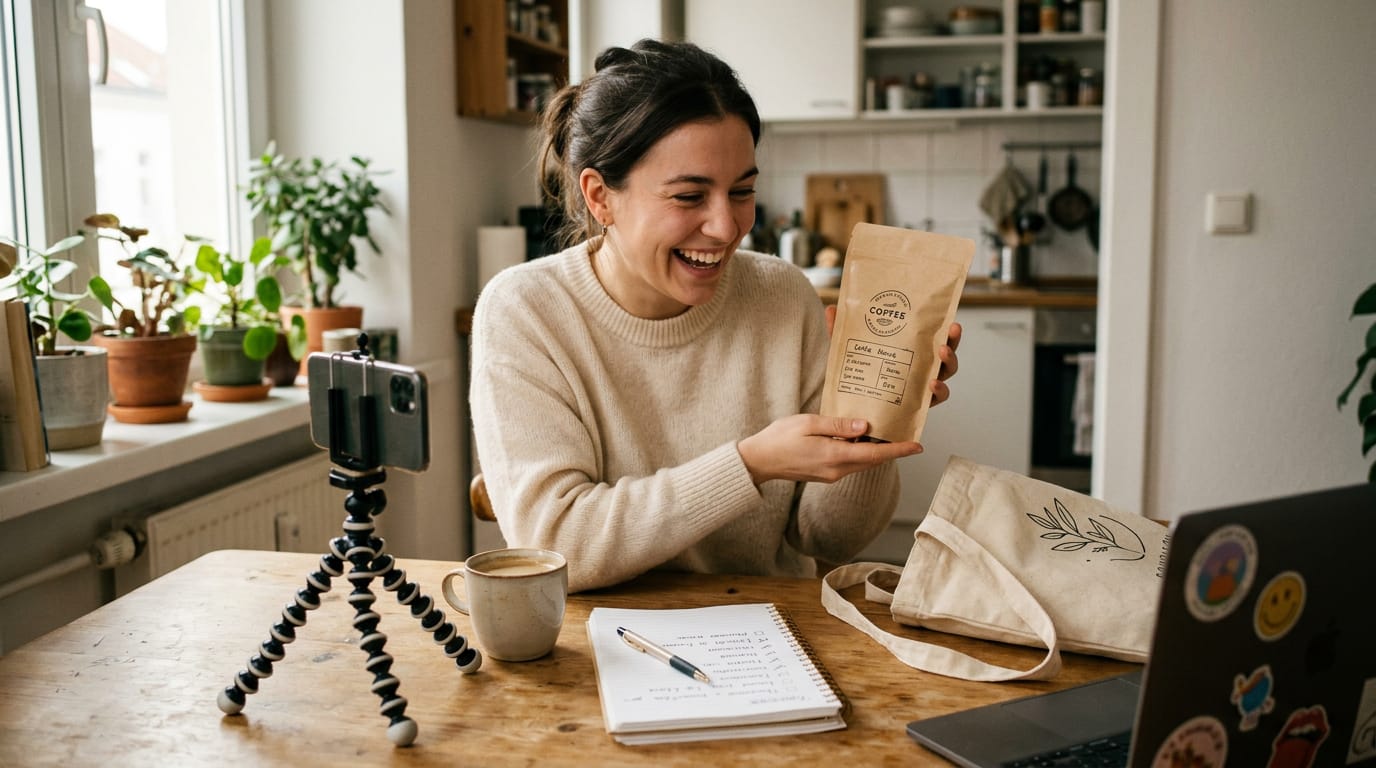
Ever had a friend ask you to test their new coffee and tell the group what you really thought? A brand deal works much like that, except a company pays you to put its product in front of your audience.
Put simply, a brand deal (also called a sponsorship) is an agreement where a brand pays a creator to feature its product in a video.
We’ll cover the main deal types, how brands pay and what to charge, how to pitch and negotiate, and how to make a sponsored video look like it belongs on your channel, even if it was shot in a spare bedroom.
Types of Brand Deals to Know
A brand deal is a partnership where a company pays you, or sends free product, for featuring it in your content. The type you’re offered shapes the workload and the timeline.
What is branded content on Instagram?
Branded content is any post, Reel, or story you make for a brand and label as a partnership. Most take one of these forms:
- One-off sponsored posts: a paid post or Reel, with no ongoing commitment.
- Long-term brand ambassadors: an ongoing role featuring you across months of content.
- Ambassador programs with product testing: you test products on camera and share honest feedback.
- Original ads and testimonials: you film an ad or record a testimonial.
Picture a home baker filming tutorials. A one-off Reel covers a single clip, while an ambassador role keeps the brand in her videos for months.
Whatever the format, the Federal Trade Commission (FTC) expects sponsorships to be disclosed clearly.
Affiliate deals paid on every sale
Affiliate deals skip the flat fee. You earn a commission on each sale made through your affiliate link or promo code. Brand affiliate programs hand you your own link, and Amazon influencer storefronts give you a curated shop of picks.
Think of a podcaster who recommends her mic. Her promo code sits in the show notes, and she’s paid for what listeners buy, not how many tune in. No sale, no commission.
Paid ads and co-branded product launches
With whitelisting, a brand runs paid ads through your Instagram account, so the ad appears under your handle. Co-branded products are built with a brand, like a bundle with both names, and limited-edition collections are short runs sold for a set window.
A streamer teams up with a headset maker on a limited-edition colorway, so her viewers can buy the exact look she streams in.
Free products in exchange for content
Sometimes the product itself is the payment, not cash. A brand ships you an item, and you feature it in your content. That makes it useful for beginners, who practice on camera with a real product.
Once cash deals arrive, though, a free item won’t cover your time, so the appeal fades for paid creators. Free is a start. It’s rarely the goal.
How Brands Pay and What to Charge
Two questions shape every brand deal: how you’re paid, and what your audience is worth.
Common ways brands structure payment
The simplest option is the flat fee, a set amount for one video. It pays for effort rather than results. Other structures tie pay to performance:
- CPM (cost per thousand views): you earn a set amount per thousand views.
- CPS (cost per sale): you earn a revenue share of each sale made through your link or code.
- Hybrid fee plus bonus: a smaller base fee plus a bonus for hitting targets.
- Price in production costs: gear, editing, and your hours belong in the quote.

What creators at each size can charge
According to eMarketer, brands increasingly favor nano creators (up to 10,000 followers), micro creators (up to 50,000), and mid-tier creators (up to 500,000) over mega-influencers.
Picture a podcaster whose home-office listeners are exactly what a standing-desk brand wants.
Influencer Marketing Hub notes that rates vary by follower tier, content type, and usage rights, and that understanding them helps brands avoid overpaying for vanity metrics.
Anchor your quote on average views, not your best-ever video.
Usage rights (how long a brand can reuse your video) and exclusivity (whether you can work with its rivals) each add to the price, so quote them separately.
Start small, then raise your rates
- Small test activations: start with one video or a short integration.
- Brands want ROI proof: ROI (return on investment) means tracking views, clicks, and codes. Pitch with proof rather than promises.
- Avoid overcommitting early: long exclusive deals lock in rates before you know your audience.
- Grow rates over time: raise them one step at a time as results come in.
How to Land Brand Deals
Most brand deals start with a pitch you send first, so we’d make outreach a weekly habit.
Pitch every week and follow up
Block one fixed slot each week for outreach. This weekly pitching system beats waiting for inspiration. Pitches often go unanswered, so build a follow-up plan: one friendly nudge a week later, then a final note.
Research each brand and pitch a specific idea rather than a generic offer. Showcase the skills only you bring. For example, a corporate-training creator who edits her own footage can promise finished clips in two days.
Avoid copy-paste templates, since brands spot form letters fast.
Turning inbound and unpaid offers into deals
An inbound offer is a brand that reaches out first, often without a fee. Don’t reject no-budget brands on reflex. When a startup sends a podcaster a free microphone arm, one honest review keeps the door open.
For product-only offers, reply with a video concept and ask for a short call about budget. If they can’t pay yet, stay polite and check back, since today’s no-budget brand may be next season’s client.
Choosing the right brands to pitch
Start with local brands and startups, which often need video. Brands already paying creators know what a sponsorship looks like, so talks move faster.
Go for a niche within a niche: a focused angle like retro console repair stands out more than broad gaming. Finally, match audience and values: a brand that clashes with your viewers can cost you trust. Brand archetypes can help you tell which sponsors share your channel’s personality and values.
Materials that show brands your value
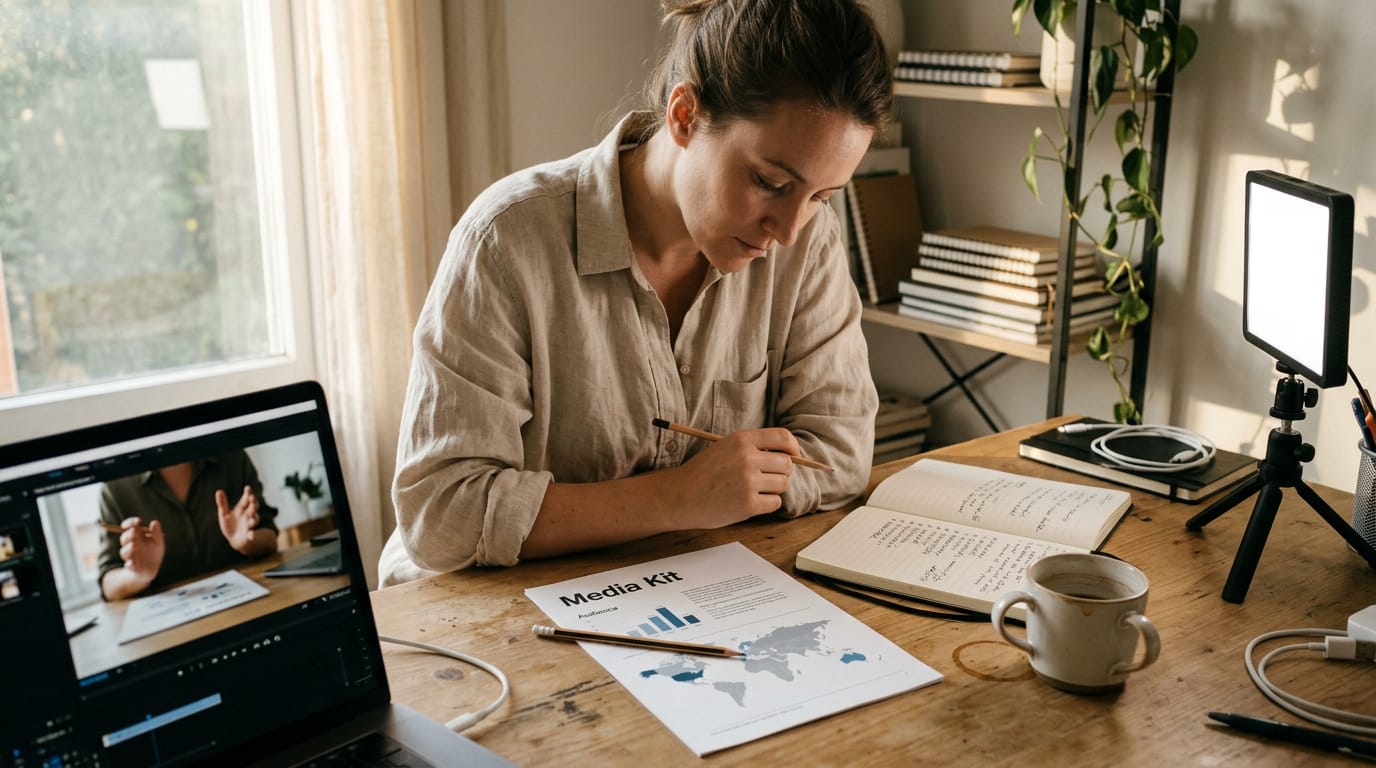
A media kit is a short document of your real numbers: audience size, viewer locations, and average views. Add a case study of a strong past video, using only verifiable results, plus a tailored proposal. Tag brands and use their hashtags when you post.
That creates user-generated content (UGC), content made by people outside the company, and it shows brands you already talk about them. Companies buy trust, not just views, so a loyal niche audience beats a big, casual one. Trust like this is what gives a company its brand equity, the value its name carries with buyers.
Back your rate sheet with a portfolio led by your best-lit frames. A course creator whose home-office clip, lit by one window and a single panel, looks studio-sharp earns a second look.
Negotiating for better terms and rates
Know your numbers first. Set a floor rate, the lowest fee you’ll accept, and make sure it covers filming, editing, revisions, and usage. Present value clearly: show what the brand gets, such as reach and reusable content. Sell outcomes rather than hours.
If a brand offers one flat fee for one video, counter with a package: a main video, two short clips, and a usage period. More deliverables give them more value and you more pay. Read every contract before signing, and watch for these red flags:
- Vague deliverables
- Unlimited usage with no added fee
- Exclusivity that blocks your other sponsors
- No payment deadline
If a brand won’t clarify these, walk away.
Bundling Content Across Several Platforms
A bundle packages one sponsorship across several channels. Here’s how to build one and pitch it without undercutting your rate.
Why bundles win more deals
Brands want to be seen more than once. According to an empirical investigation into cross-media exposure, multi-platform campaigns can create repeated audience touchpoints across channels. That’s the appeal: one partner, several placements.
Bundles also tend to lift close and renewal rates, and they feel like more value to the buyer.
Think of a podcaster whose main episode runs on YouTube. Add a newsletter mention and an Instagram post, and the same brand appears in three places from one shoot.
What to include and how to price
Build your bundle in layers:
- YouTube as anchor. Your long-form video carries the base rate.
- Newsletter and Instagram add-ons. Short placements that extend the main video’s reach.
- Price each add-on at 30-50% of your base rate. Keep them modest.
- Don’t discount the bundle. Cutting your total signals the video is worth less. Let the add-ons supply the extra value.
- Repurpose existing content. Cut a newsletter segment from the episode you already filmed.
When and how to pitch a bundle
Pitch the bundle as an upgrade to a deal the brand already knows, and raise it at renewal, when the brand is already deciding whether to continue.
- Single package rate first. Quote one total and break out the components only if asked. Pitch the total value, not the line items.
- Follow up consistently. Send a short, polite note on a schedule you set in advance.
Same shoot. More reach.
Which Niches and Brands Pay Creators Well
Some niches and brands show up in sponsorship spending again and again. Here’s where the budgets are, and how to approach each brand.
Niches with the strongest brand budgets
Health and fitness, beauty and fashion, and pets, family, and gaming are the niches where brands most often look for creators.
Real brands that have paid creators
Flinque’s list of brands that spend the most on Instagram influencers includes:
- Fabletics, Fashion Nova, and Lululemon in apparel
- Walmart and Amazon in retail
- Audible, HelloFresh, and Hilton in audiobooks, meal kits, and travel
That list puts Fashion Nova, a fast-fashion label, at roughly $40M. Treat spend figures as a map of who’s buying, not a promise of what any brand will pay you.

How to tailor outreach to each brand
Match your pitch to how each brand takes creators:
- Ambassador applications: Some brands run an open form for longer-term creator roles, so you’ll want to check their sites.
- Brand outreach pages: A partnerships or contact page shows where to send your pitch.
- Short-term campaigns: A one-off sponsored video with a set timeline is often an easier first yes.
- Content fitting lifestyle: Pitch products that already fit what you film.
Consider a meal-prep creator filming lunches in a basement kitchen corner. When a meal-kit brand opens an ambassador application, she sends three videos showing the product in her real routine, so the brand sees the fit right away.
How do you get a celebrity to endorse your brand? Send a clear, specific pitch through their agent or management team, not a cold message. Explain why the match suits their audience and keep the ask simple. Then be ready for a no.
Managing Deals and Measuring Brand ROI
Landing a sponsor is only the start. Measuring your return on investment (ROI) shows whether a deal paid off.
Choosing influencers by engagement and fit
Brands weigh five things, not just your follower count:
- Engagement rate: the share of viewers who like, comment, or share your videos.
- Audience demographics: your viewers’ age, location, and interests.
- Follower count: a rough measure of reach, not a guarantee of sales.
- Past performance: how your videos have actually done.
- Discovery tools: platforms where brands search for creators by niche.
Consider a podcaster who films a show for remote workers from her spare room. A desk-accessory sponsor speaks straight to her viewers, which is why fit matters more than size.
Running campaigns and tracking results
Start with a contract that spells out your deliverables, including video count and go-live dates. Set a review window for content approvals so feedback doesn’t drag on.
Agree on your key performance indicators (KPIs), such as views, clicks through a tracked link, or discount code redemptions, before you post. Tracking means measuring results, not guessing at them.
Use the numbers to optimize future collaborations, repeating what performed and dropping what didn’t.
Benefits and the tax basics to know
Sponsorships put your videos in front of a targeted audience who already match what the brand sells. Each finished deal adds to your portfolio and your creator revenue.
Brand payments are money you’ll need to account for at tax time, so keep financial records: invoices and a log of deliverables. Good records make tax season far less stressful. Tax rules vary by location, so consult a tax professional before you file.
Brand deals come down to three things: knowing which type fits your channel, pricing for the value you actually deliver, and pitching with a clear picture of what the sponsor gets.
You don’t need a studio to do it well, but your setup does need to hold up on camera.
When the light is flattering and the audio is clean, a sponsored segment looks like part of your content rather than a commercial break. Your viewers stay with you, and the brand gets a segment it can be proud of.
Protect your audience’s trust, and the deals will follow.
References
- An empirical investigation into the combined effect of sequence and cross–media exposure on audience attitudes — doi.org (2010)
- Brands ditch big names for nano-influencers with niche reach — emarketer.com (2025)
- Brands That Spend Most on Instagram Influencers — flinque.com (2026)
- Instagram Influencer Rates: A Complete Guide for Brands in 2026 — influencermarketinghub.com
Questions
What is branded content on Instagram?
Branded content on Instagram is a post, Reel, or story created for a brand and labeled as a partnership. It can be a one-time sponsored post, an ongoing ambassador arrangement, product testing, or an ad or testimonial. Sponsorships should be disclosed clearly.
What is the meaning of brand deals?
A brand deal is an agreement in which a company pays a creator, or provides free products, in exchange for featuring its product in content. Payment may be a flat fee, commission on sales, or a combination of a fee and performance bonus.
How to get a celebrity to endorse your brand?
Send a clear, specific proposal through the celebrity’s agent or management team rather than relying on a cold direct message. Explain why the partnership fits their audience, make the request straightforward, and be prepared for them to decline.
Sources
- Instagram Influencer Rates: A Complete Guide for Brands in 2026 | Influencer Marketing Hub, influencermarketinghub.com
- Brands ditch big names for nano-influencers with niche reach, emarketer.com,
- An empirical investigation into the combined effect of sequence and cross–media exposure on audience attitudes, doi.org,
- Brands That Spend Most on Instagram Influencers | Flinque, flinque.com,