Slanted Camera Angle: What It Is and How to Shoot One
Slanted camera angle tilts the horizon to make a scene feel off balance. See how to shoot the effect with a phone or webcam in a small room.

Chapters
In short
A slanted camera angle, also called a Dutch angle or canted angle, rolls the camera so the horizon and other lines run diagonally instead of level. Filmmakers use it to create tension, unease, confusion, or a sense of a character’s inner turmoil, while ordinary up-and-down tilts reveal or reframe parts of a scene. Use a phone or webcam to make the slant deliberate, and save it for moments when it serves the story so it feels expressive rather than distracting.
Think about a picture frame hanging a few degrees off in a hallway. Your eyes catch it instantly.
A slanted camera angle works the same way on purpose: you tilt the camera so the horizon runs diagonal, and the whole frame feels a little off balance. Filmmakers often call it a Dutch angle.
In this post, we’ll cover what a slanted angle really means, why filmmakers reach for it, and how to shoot a tilted shot with a phone or webcam in a small room. We’ll also flag when to skip it.
What a Slanted Camera Angle Means
A slanted camera angle, usually called a Dutch angle, rotates the frame so the horizon runs on a diagonal. Here’s what we’ll cover: what it looks like, where it came from, and how it differs from other tilts.
What a Dutch angle looks like
The camera rolls on its axis, so the horizon and walls no longer run parallel to the frame’s edges. You’ll also hear it called a Dutch tilt or canted angle.
The French angle label gets used loosely for the same tilted frame, so the Dutch angle is the name to learn.
Viewers tilt their own heads to make sense of it, and that reaction is what makes the shot feel tense. Consider a podcaster in a converted closet who rolls her phone a few degrees for one cold open.
The frame feels off, and that jolt hooks viewers before the first joke.
How tilt, pan and Dutch angles differ
| Move | Direction | Like |
|---|---|---|
| Tilt | Up and down (vertical rotation) | Nodding yes |
| Pan | Side to side (horizontal pivot) | Shaking your head no |
| Dutch tilt | Roll around the lens axis | Tilting your head toward a shoulder |
Same word, different move. Pan changes where the camera points, while a Dutch angle changes how the frame sits. A tilt also discloses information. Moving up from a desk to a face reveals who’s there, one piece at a time.
Pan and tilt together make a diagonal sweep, but the horizon stays level, so it’s movement, not a lean.
Where the name Dutch angle comes from
Filmscalpel ties Dutch angles in cinema to German Expressionism. According to No Film School, one account links the angle’s origin to a naval blockade that kept German movies made around the First World War from being exported.
The name itself is usually explained as a slip: Deutsch, the German word for German, sounded like Dutch to English speakers. A small slip, a lasting label. The look was already showing up in 1920s cinema.
Other technical tilts you might hear about
A few other terms use the word tilt too:
- Lens tilt. Some lenses tilt against the sensor to control depth of focus, shifting which part of the frame stays sharp.
- Tilt-shift. This combines a lens tilt with a shift, often used to make real scenes look like miniatures.
- Tilt head. A tripod head that pivots up and down changes pitch, not roll, so it can’t make a Dutch angle on its own.
Why Filmmakers Reach for Tilted Angles
Tilting the camera changes how a shot feels without moving an actor or changing a line. Here’s what each tilt tends to say.
How tilts build tension and unease
A tilted frame makes viewers work a little harder, because the world no longer sits level. That wrongness creates psychological unease, a sense that something is off before anyone can name it. It can:
- show a mind slipping,
- build suspense toward a reveal, or
- signal impending doom, as if things are about to tip over.
The tilt doesn’t tell viewers what is wrong. It makes them feel that something is. Imbalance leaves viewers disoriented too, and that disorientation is the point.
Framing a character’s inner conflict
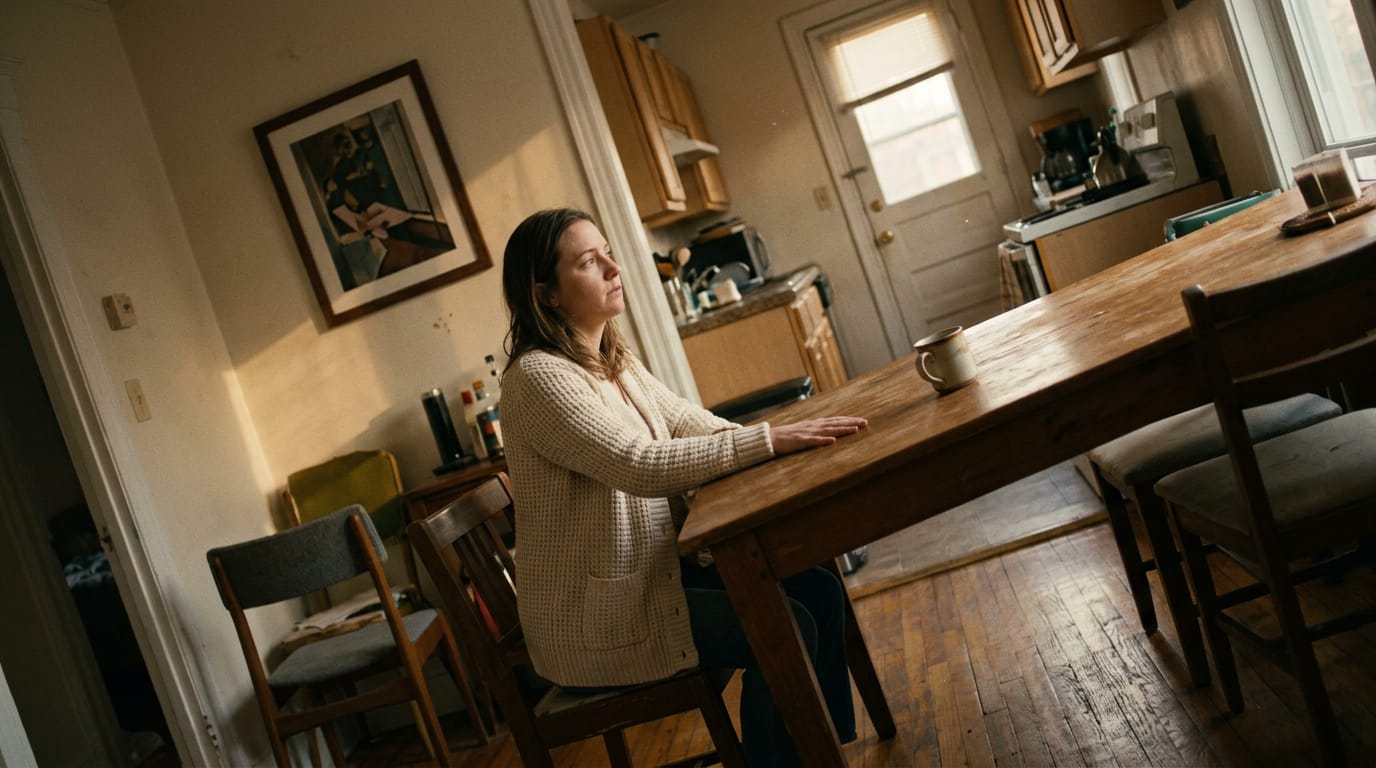
Tilting the frame around one character sets them apart from the room, a visual way of framing someone who doesn’t fit. It expresses internal turmoil without dialogue and offers a window into the character’s mind, showing the scene the way they see it.
A canted frame can also deliver a subversion of power: the character who seems in control suddenly looks shaky.
Consider a podcaster filming a confessional segment in a small bedroom. A slight tilt on her webcam during the hardest part of her story makes the frame as unsettled as she is. The frame does the talking.
How high and low angles show power
Tilting up from a low position gives you a low angle, with the lens looking up at the subject. Tilting down from above gives a high angle. Low angles convey power, making a subject look larger and in command.
Shooting from above signals superiority over whoever is in frame. A high angle, in turn, conveys vulnerability, making its subject look small and exposed.
Storytelling jobs for up and down tilts
Up and down tilts also do practical storytelling work:
- Reveal sequences: a tilt uncovers what the viewer hasn’t seen yet, sliding from a floor up to a face.
- Establishing shots: a tilt down from a skyline to street level sets the location before the cut.
- POV attention or nodding: a tilt mimics a gaze settling on something, or a small nod of acknowledgment.
- Headroom reframing: a tilt adjusts the space above a subject’s head so the frame stays balanced.
- Extreme tilt to inverted view: a tilt far enough to flip the world signals that something has gone badly wrong.
Movies and Genres That Use Tilted Shots
Some shots feel off before you can say why, and that’s usually the point. Here’s where filmmakers reach for the tilt.
Genres that lean on Dutch angles
A Dutch angle rolls the camera so the horizon leans. It suits these genres:
- Thrillers and psychological dramas. A slight lean keeps viewers uneasy.
- Horror. Familiar rooms feel unstable when nothing sits level.
- Comedy. The lean sharpens slapstick and confusion.
- Science fiction. An unfamiliar world feels less grounded.
- Dream sequences. The lean signals that the usual rules have changed.
- Chaotic scenes. Brawls and crowds feel like they’re spinning out of control.
Think of a streamer filming a dramatic intro in her bedroom. Rolling her phone a few degrees makes the desk look like a crime scene. The payoff is a tense mood from gear she already owns.
Classic and noir films that tilt
Noir took to the tilt fast. In The Third Man, Richard Misek’s essay on the film describes how its famous Dutch angled shots turn doorways, windows, and staircases into lattices of diagonals.
Noir’s shadowy streets suit a crooked camera, and the campaign scene in Citizen Kane tilts to make a political push feel unbalanced. Those skewed visuals owe something to German expressionism, which bent sets to show inner unease.
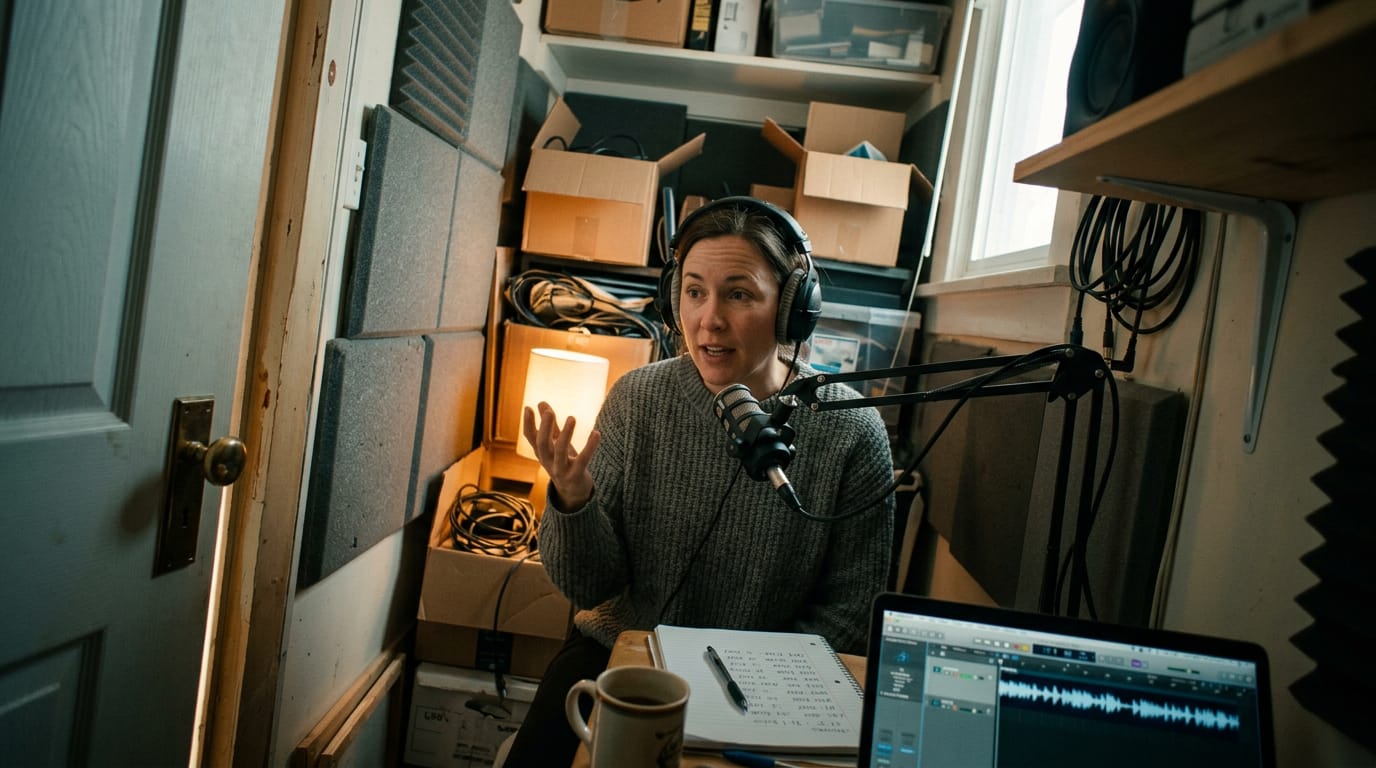
Consider a podcaster recording a true-crime cold open in a converted closet. One slight tilt as the story turns warns viewers that something’s about to go wrong. That’s a moody opener with no extra gear.
Modern films with memorable tilts
Modern films use tilts for tension:
- Mission: Impossible tilts through its high-pressure set pieces.
- Inglourious Basterds leans on tilts in its tense standoffs.
- The card-counting scene in Casino tilts to match its calculating mood.
- Boris in Snatch tilts as his menace builds.
- Thor uses tilts in its action beats.
- Black Swan tilts as its lead’s grip on reality slips.
- Inception and Shutter Island use tilts to blur what’s real and what’s dreamed.
- The Dark Knight tilts through its chaotic, fast-cut scenes.
In these films, a tilt usually shows how a character feels, not what is happening.
Directors who tilt the camera
Danny Boyle uses tilts to keep his films restless and kinetic. Spike Lee leans on them to push tension in urban dramas. Tarantino and Scorsese both use them to keep scenes unpredictable, while Brian De Palma builds suspense and unease with them.
When you watch, ask what a tilt is doing: energy, unease, or confusion. Then you can choose your own.
Other iconic shots that tilt down
Not every famous tilt is a Dutch angle. A tilt down pivots the camera up and down instead of rolling it. The opening of Star Wars tilts down from sky to planet, and a tilt from a landmark to the street anchors a location.
Think of a real estate agent filming a listing from a rooftop. A slow tilt down to the front door shows buyers where the house sits before any narration starts.
Plan and Shoot Your Tilted Shots
A tilted shot only works when it looks chosen, not accidental, so plan it before you hit record. Here’s how to set it up.
How do I change the camera angle?
You change the angle with a tripod for steady control, or handheld for a looser lean. Start from eye level and choose wide, medium, or close framing; wide shots show the whole room leaning. Tilt until door frames and shelf edges run diagonally.
Experiment with the degree, since small tilts can look like mistakes. Level the horizon first so you know what straight looks like, then tilt on purpose.
Picture a podcast host filming in a converted closet with her phone on a small tripod. A ball head (the swivel that angles the phone) lets her tilt it a few degrees and lock it. Her intro clip looks deliberate, and she never opens the editor.
Map out your shots before filming
Decide the tone first, since a tilt signals tension or energy. Mark which shots tilt on your shot list, then cut between tilted and level frames.
- Static or moving camera: locked off, a tilt feels composed; moving, it adds momentum.
- Dolly or Steadicam combinations: a dolly (a wheeled cart) or a Steadicam-style stabilizer (a body-worn rig that smooths walking) can carry the tilt through a move.
- Light the tilted shot first: check your key light (your main light) on the tilted frame, since shadows now run diagonally.
Fixing a tilted shot in editing
Tilting in-camera keeps the full image sharp, so it’s always the first choice. If the tilt missed, fix it in post:
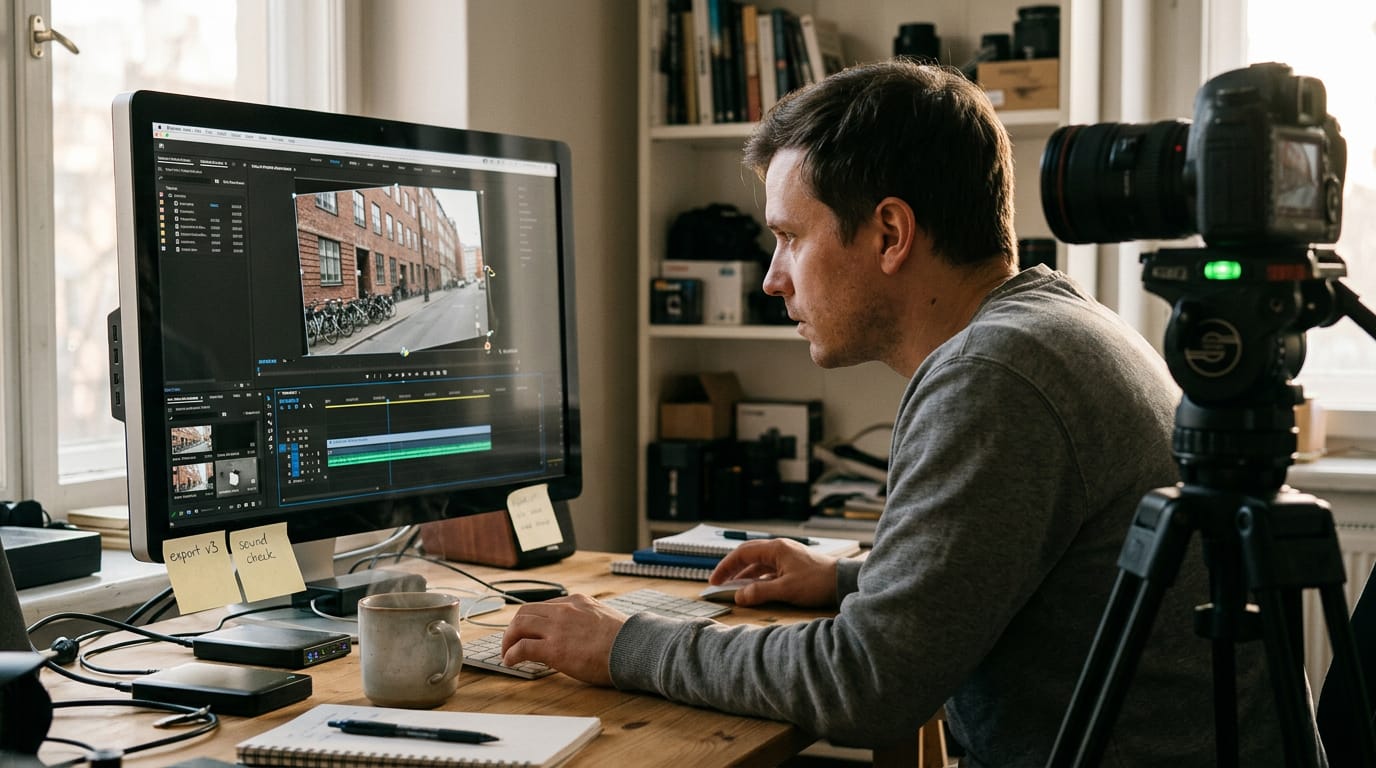
- In Adobe Premiere Pro, rotate the clip 15 degrees.
- Scale it up so the corners fill the frame, then reposition the subject.
- Check the edges, then export.
Using Tilts Without Overdoing It
A tilt works best as a rare special effect, not a default. Here’s why overdoing it backfires and how to balance it against steady shots.
Why too many tilts feel forced
Tilts hit hardest when they’re rare. Use them sparingly, and each one signals a shift. How often you use them matters more than how far you tilt. Overdo it, and viewers lose track of what the angle means.
The Thor mood-shift criticism makes a related point: each tilt jolts the audience into a new mood, so scene after scene of them stops feeling earned and starts feeling like whiplash.
Overuse also feels forced. When the camera tilts on every line of dialogue, viewers can tell the effect is there for its own sake. Picture a solo YouTuber who tilts her webcam for every joke.
Her viewers start watching for the next tilt instead of the punchline.
Mix tilts with normal eye-level shots
Keep plenty of eye-level shots in the mix so each tilt has something steady to stand out against.
The angle also has to fit the story. A tilt should match what’s on screen, like rising tension. Before you reach for one, ask what it does for the viewer. Let purpose guide the choice, not novelty.
Pair the tilt with solid composition, like an off-center subject or clean headroom, so it looks intentional. Consider a wedding videographer who shoots the reception at eye level, then tilts once when the best man’s toast turns chaotic.
Everything around that shot is steady, so the single tilt lands. Rarity is what makes it work.
Other Camera Angles Worth Knowing
The most flattering angle for photos is usually the camera at or just above eye level, since it keeps a face looking natural. The angles below are for changing the mood on purpose, so know what each one says before you reach for it.
Can you give examples of low-angle shots?
A low-angle shot puts the camera below the subject’s eye line, so it looks up at them rather than down. Go further with an extreme low angle and the subject towers over the frame, which reads as power and heroism.
A low angle also increases perceived height.
For example, a solo reviewer might prop her phone on a stack of books and angle up at the gadget in her hands. The product looks bigger and more impressive, and she didn’t need any extra gear to get it.
Shots from above and directly below
A high-angle shot looks down on the subject and can make them seem small or vulnerable. An overhead top-down view points straight down, which suits a desk or a recipe. A nadir shot points straight up from below, and it’s technically complex.
In a small room, the ceiling and light stands tend to creep into frame, so this one takes patience. Save it for a shot that earns the effort.
Pairing a tilt with other shots
A tilted frame pairs well with other angles:
- Dutch plus low angle: the slant makes a looming shot feel unsettled, like a villain’s entrance.
- Dutch with over-the-shoulder: the tilt throws off a tense conversation.
- Dutch with close-up: a tight, slanted frame on a face heightens the emotion.
Consider a sketch creator filming in a bedroom corner. One tilted close-up of her surprised reaction turns a quiet beat into the punchline, and it needs nothing beyond her phone.
A slanted angle adds tension or unease, but only when it has a reason to be there. Used with intent, it lets your frame say something your dialogue doesn’t.
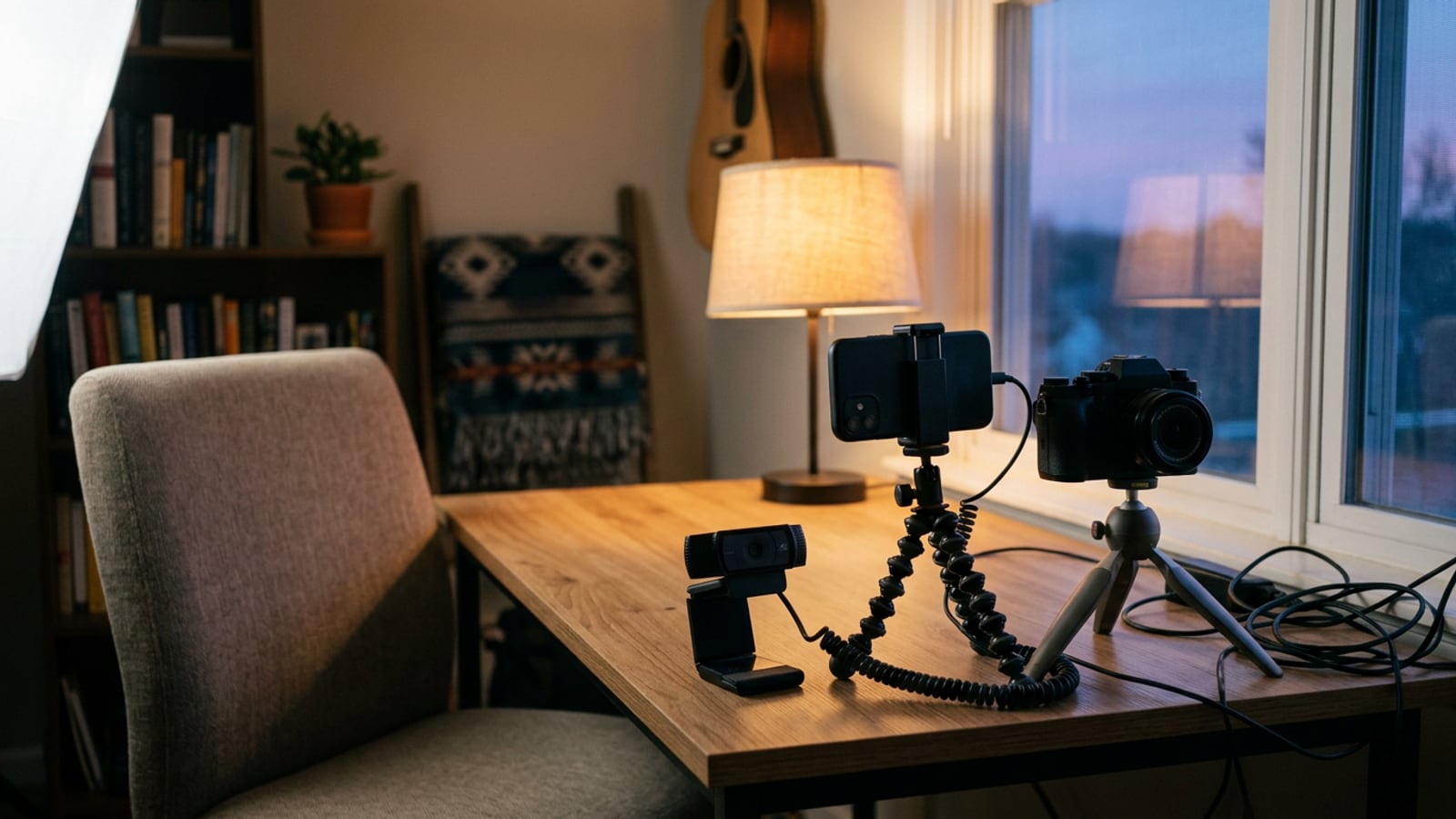
You don’t need a film set to try it. A phone or webcam on a stand in a small room is enough, as long as the rest of the shot stays clean and the tilt looks chosen rather than accidental.
Tilt it on purpose, and your frame starts telling the story before your words do.
References
- Misek, Richard (2007) Wrong Geometries in The Third Man … — kar.kent.ac.uk
- What is the ‘Dutch Angle’? — nofilmschool.com
- Filmscalpel — filmscalpel.com
Questions
What is it called when the camera angle is tilted?
A tilted camera angle is usually called a Dutch angle, Dutch tilt, or canted angle. The camera rolls so the horizon runs diagonally across the frame.
What is the most flattering angle for photos?
For most photos, the most flattering angle is at or just above eye level. It tends to keep facial features looking natural.
What is a French angle?
A French angle is a loose label sometimes used for a Dutch angle: a shot with the camera rolled so the horizon appears diagonal. Dutch angle is the more common term.
What is a tilt shot in film?
A tilt shot moves the camera up or down by pivoting it vertically, like nodding your head. It can reveal something gradually or shift attention within the scene; rolling the camera to slant the horizon is a Dutch angle, not a tilt shot.
How do I change the camera angle?
Mount the camera on a tripod or hold it by hand, then adjust its position and direction to frame your subject. For a Dutch angle, first level the horizon, then roll the camera until the horizon or room edges run diagonally; a tripod ball head can help you set and secure the angle.
Why is the Dutch angle shot used in movies?
Filmmakers use Dutch angles to make a scene feel tense, unstable, or psychologically unsettling. The slanted frame can suggest a character's inner turmoil, confusion, danger, or a loss of control, so it is most effective when used deliberately and sparingly.
Can you give me some examples of low-angle shots?
Examples include filming a hero from near the ground while looking up, placing a camera below a person to make them seem powerful, or shooting a product from low down so it appears larger. An extreme low angle can make a subject tower over the frame and convey power or heroism.
Sources
- What is the 'Dutch Angle’? | No Film School, nofilmschool.com
- Filmscalpel | Why movies tilt the camera like this, filmscalpel.com
- Misek, Richard (2007) Wrong Geometries in The Third Man ..., kar.kent.ac.uk