XY Mic Technique Explained for Stereo Recording
X-Y mic technique uses timing and loudness differences to place sound in space; learn setup angles, prevent mono phase issues, and adapt it to instruments.


Chapters
In short
The X-Y mic technique records stereo with two closely positioned microphones angled toward each other, usually using matched cardioid mics. Keep the capsules nearly touching, adjust angle, height, and distance to balance the source with room sound, and check the mix in mono; the shared pickup point helps preserve a solid sound when channels are combined. X-Y delivers a focused, narrower stereo image with a simple setup, making it a dependable choice for instruments, ambience, and home recording.
Close your eyes in your living room and you can usually tell where the dishwasher is running. Your ears compare small differences in timing and loudness to place every sound around you.
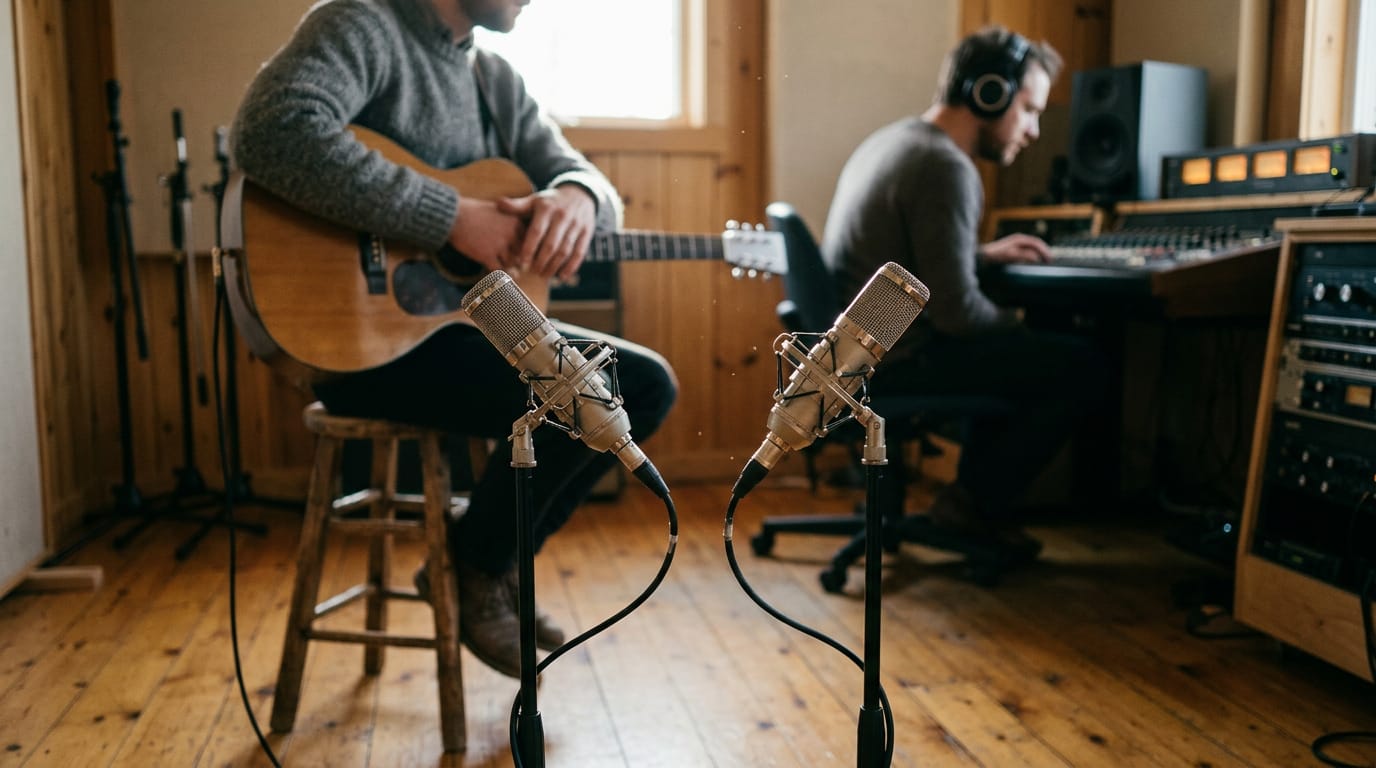
X-Y mic technique works the same way: two microphones, with their capsules (the sensing parts) placed close together and angled toward each other, pick up the same sound slightly differently on each side.
That gap between the two channels is what gives a recording its sense of space.
In this post, we’ll cover how to set the angle and distance, how to avoid phase problems (when the two signals can cancel each other out) once the mix folds to mono, which gear to pick, and how to adapt the technique for a home room, on camera, or with a handheld recorder.
Setting up Your X-Y Mic Technique
Setup comes down to three choices: how the mics are paired, how high and far away they sit, and what kind of stereo image you want.
Pairing two mics at the right angle
Start with two identical cardioid mics, which pick up mostly sound from the front. Stack their capsules (the small sensing parts inside each mic) so they’re nearly touching, then angle them.
A 90-degree angle is the typical setup, though a wider V angle gives you more spread. This arrangement is also called a coincident pair.
Finding the right height and distance
Mount the pair above the snare for centering on a drum kit, then listen. Mic height changes how the room sounds, so small moves make a real difference. Moving back picks up more of the room.
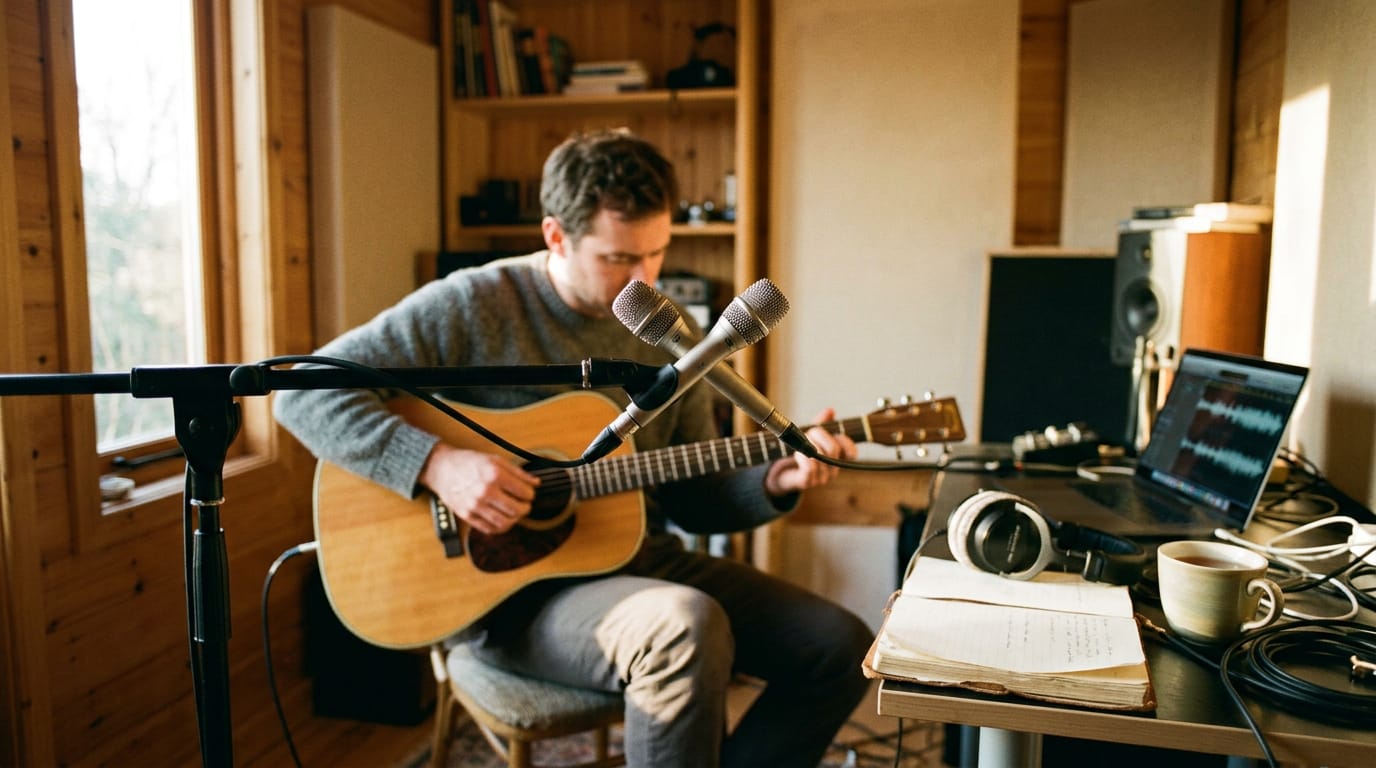
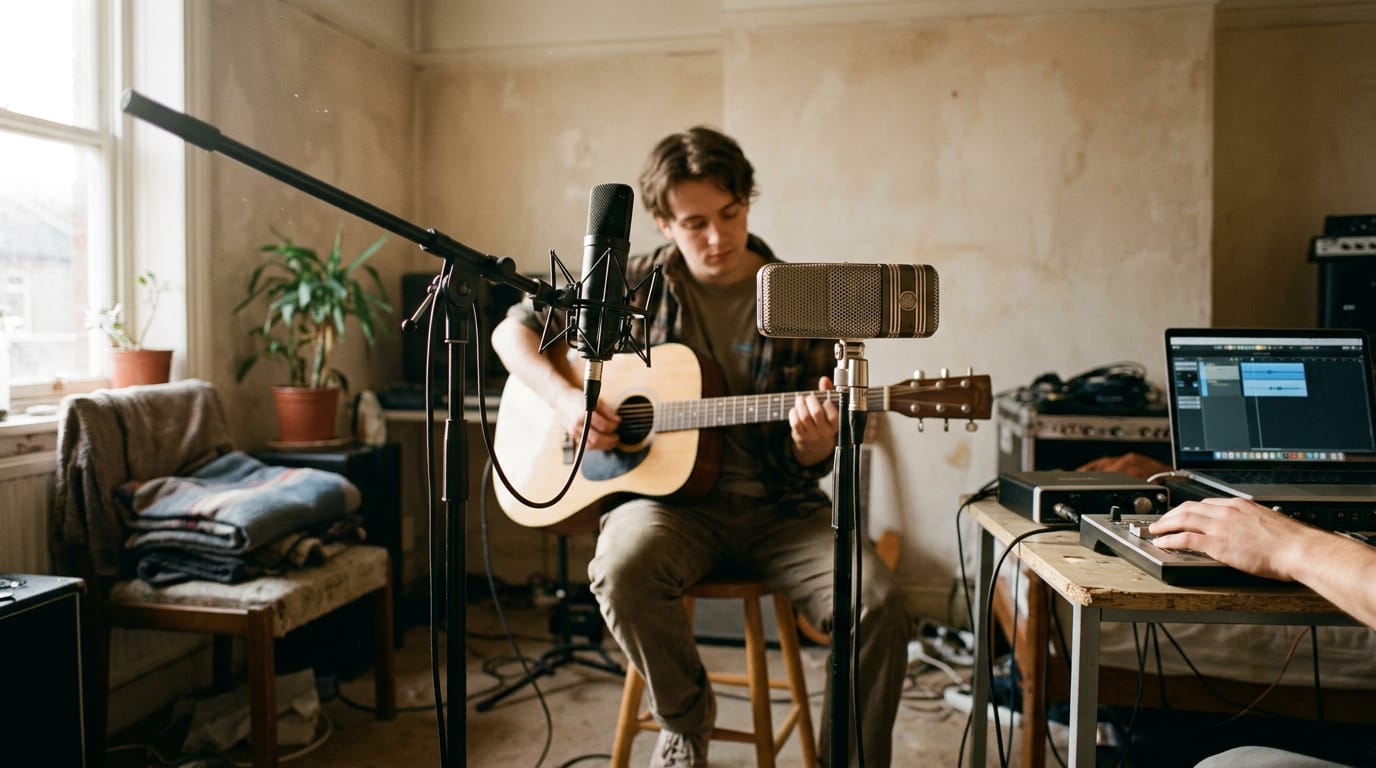
If yours is untreated, with bare walls and hard surfaces bouncing sound around, move closer instead. For guitar, place the pair about 7 inches from the 12th fret. Picture a guitarist recording covers in a bare-walled spare bedroom.
Keeping the pair close means less of that echo reaches the take.
The narrower, more natural stereo image
X-Y gives you a narrower image than a spaced pair, closer to the natural, ear-like picture you’d hear standing in the room. It shines when the source is focused enough to support that tight image, like a solo guitar.
When you mix, pan the two channels hard left and right. Narrower isn’t a flaw here. It’s the point.
Before you hit record, run through these steps:
- Set two identical cardioid mics at 90 degrees, capsules nearly touching.
- Mount above the snare or about 7 inches from the 12th fret.
- Move closer in an untreated room, or back for more room.
- Listen, adjust height, then pan hard left and right.
Avoiding Phase Trouble When Mixed to Mono
Phase trouble sounds like studio jargon, but it really comes down to timing.
How late-arriving signals cancel each other
Mics at different distances from a voice catch the same sound at slightly different times. When you fold a stereo pair down to mono, those late copies combine with the originals and cancel parts of the sound, a problem called comb filtering.
The result is a thin, hollow tone, with some frequencies boosted and others cut. It’s less about whether the mics hear the sound and more about when they hear it.
Why X-Y setups avoid phase problems
A comparison of XY and mid-side (MS) microphone techniques describes X-Y as guaranteeing mono compatibility, since both capsules share the same point and sound reaches each one nearly simultaneously. Here’s the short version:
- Shared point. Both capsules sit in the same spot, so there’s no gap for a delay.
- Near-simultaneous arrival. Sound hits both capsules almost together, leaving little to cancel.
- Guaranteed mono compatibility. Those two facts mean the mix folds down cleanly.
- Easy, quick setup. One mount, one stand, and no spacing math.
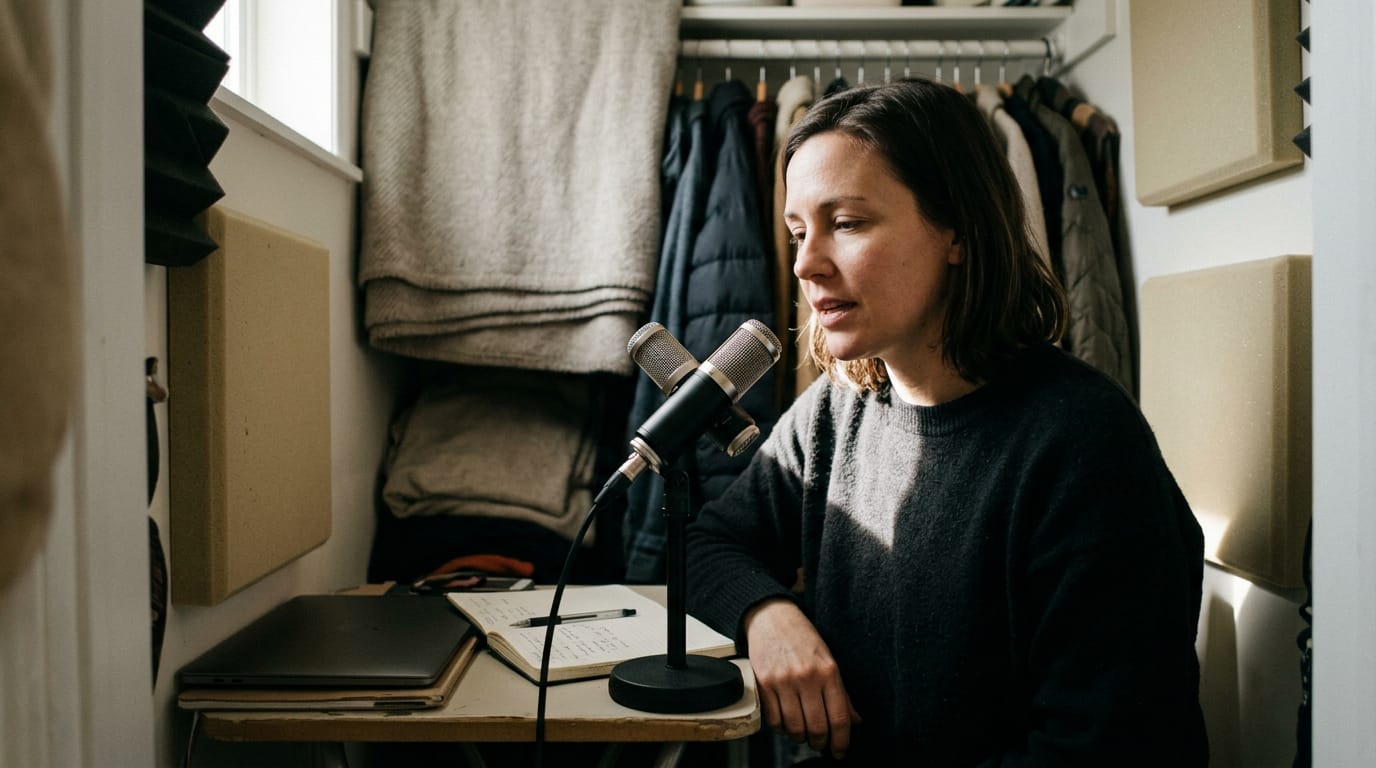
Take a podcaster recording in a converted closet. One X-Y pair on a desk stand is all she needs, and her voice sounds full after editing.
Reducing phase issues in spaced pairs
Spaced pairs need a bit more planning. Work through these steps:
- Apply the 3:1 rule: space the mics about three times as far apart as each mic sits from the source.
- Keep both mics equidistant from the source so neither one hears it first.
- Audition placement in mono. Run a mono fold-down check yourself by summing the channels and listening, then nudge a mic if the voice thins out.
Your ears in mono make the final call.
Picking the Right Gear and Mics
Good X-Y sound starts with the right hardware, and you don’t need a studio’s worth of it. Here’s what we’d look for.
Which mic types work best
Look for a matched pair: two mics of the same model, so their sensitivity and tone line up. Two that merely look alike can leave one side sounding thinner than the other.
- Small diaphragm condensers are a popular pick because their compact capsules (the parts that catch sound) can sit close together, keeping the stereo image tight.
- Multipattern large diaphragm mics switch between polar patterns (the directions a mic listens in), so one mic covers several jobs.
- A figure-eight capable mic can switch to a figure-eight pattern, which picks up the front and back and rejects the sides.
Ready-made X-Y mics and add-ons
Integrated X-Y stereo mics house both capsules in one body, so the angle is set for you. If you’d rather plug in than match and mount, this is your shortcut.
Consider a solo YouTuber who wants clean room sound behind her videos. A clip-on stereo mic for her camera or phone captures that ambience without a separate rig.
Stereo bars are mounting bars that hold two mics at a fixed angle and spacing. Set the bar once and the pair stays put, so every take matches your setup.
A handheld recorder with built-in X-Y keeps the pair and the recording in one unit. Think of a podcaster with two guests at a kitchen table: one unit in the middle captures the whole conversation.
The best mic is the one you’ll actually set up.
Setup Tips for Each Instrument
Each instrument needs its own spot for the pair, but the logic stays the same: it’s less about which mic you own and more about where it sits.
The same approach carries over to voice, ambience and Foley recording (sound effects matched to on-screen action).
Placing overheads on the drum kit
Overheads are the mics hung above the kit to capture cymbals and the overall sound. One pair can be set up five ways, so you can test them without buying anything new.
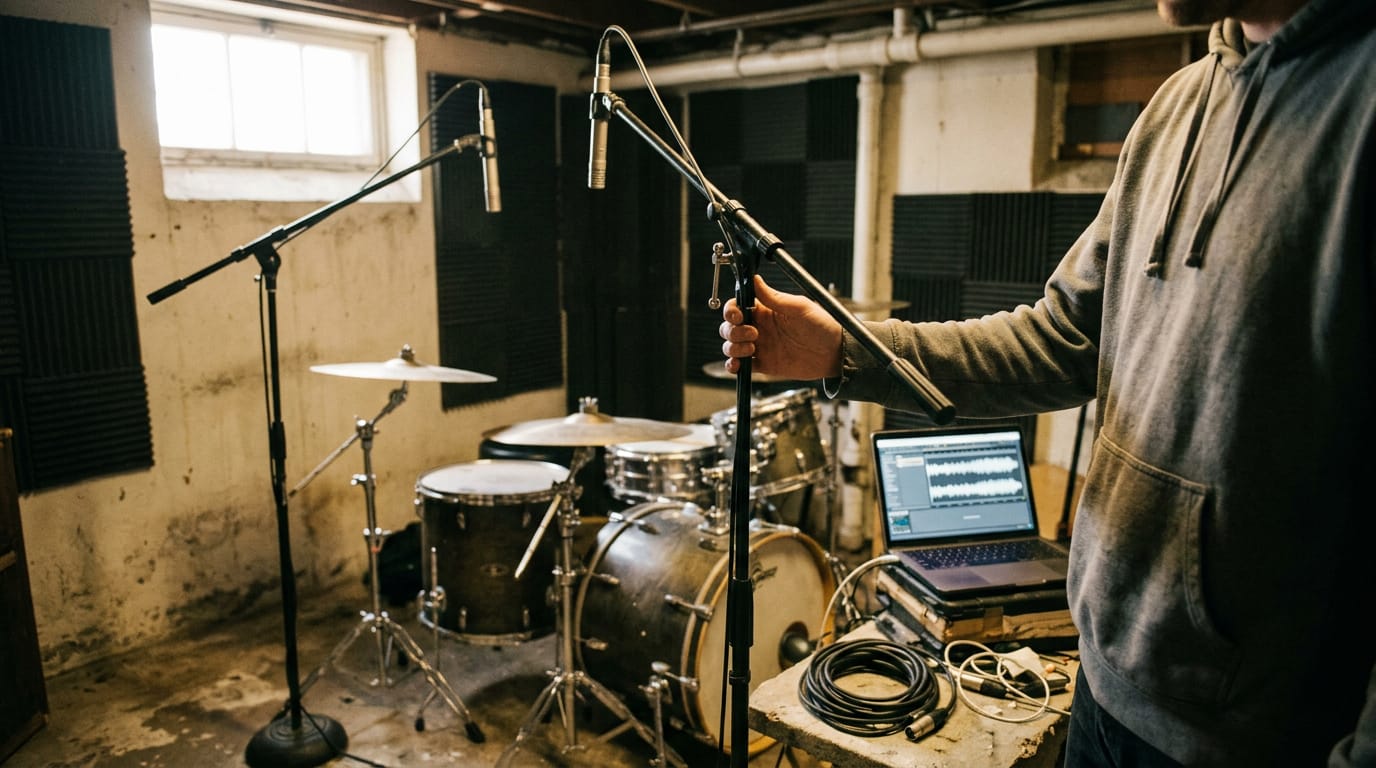
Height is the main lever: raising the pair brings in more room sound, while lowering it keeps the focus on the kit. Keep the pair centered so the kick and snare sit in the middle of the stereo image.
Picture a YouTuber filming drum covers in a basement corner. Moving the same pair higher for a roomier take or lower for a tighter one takes minutes. Here’s a quick cheat sheet by goal:
- More room: raise the pair and favor room sound.
- Tighter kit: lower the pair and focus on the drums.
Recording an acoustic guitar
A small-diaphragm pair (the thin membrane that picks up sound) aimed at the 12th fret is a clean starting point. A large diaphragm pair at the bridge gives you a different character to compare.
A spaced variation places the two mics a short distance apart over the player’s shoulder. X-Y is the reliable option when you want dependable results without much fuss, and it stays consistent when you check the mix in mono.
Consider a singer-songwriter recording demos in a spare bedroom: one X-Y pair at the 12th fret gets a solid take without moving the furniture. Start there.
Other Stereo Techniques Worth Knowing
X-Y is one way to capture stereo, and it isn’t always the best fit. Here’s how the other common layouts compare and where each one earns its spot.
The spaced pair or A/B method
The spaced pair, also called the A/B method, uses two cardioid or omni mics set apart rather than together at one point. Sound reaches each mic at a slightly different moment, which gives you a wide stereo image.
The trade-off is phase issues, where those timing differences cancel parts of the sound and leave a thin mix when it’s folded to mono.
Spacing also causes tonal variation across the instrument, so a guitarist who shifts a few inches changes how each channel sounds.
A podcaster with two guests on one sofa gets that wide, room-filling feel, but should check the mix in mono before committing.
How the ORTF pair mimics your ears
The ORTF pair places two cardioid mics 17cm apart at a 110-degree angle. A paper on microphone techniques for surround sound describes the layout the same way.
That spacing roughly copies how your ears sit on your head, and it’s wider than X-Y, so you get more sense of space. A stereo bar holds both mics at the right spacing and angle, giving you repeatable placement rather than a fresh measurement each session. If that ear-like spacing appeals, ORTF microphone technique shows how two mics capture stereo.
A YouTuber recording voiceovers at the same desk each week can clip the bar to a stand and hit the same spot every time.
How mid-side recording works
Mid-side, or M/S, pairs a cardioid mic aimed at the source with a figure-eight mic turned sideways to pick up the left and right sides. Afterward:
- duplicate the side track
- invert the copy
- pan the two copies hard left and right
- adjust the side level in the mix to set the width
Because the sides pick up the space around the source, you need a room that sounds good.
Picture a streamer recording a quick acoustic intro in a spare room: the mid mic captures the guitar, and later they push the side up for a bigger sound or pull it back for something tighter, without moving a mic.
Capturing room ambience with a Blumlein pair
A Blumlein pair is two figure-eight mics crossed 90 degrees apart. A figure-eight mic hears from the front and back, so the pair also captures the room behind the mics, not just what’s in front.
It needs a room that sounds nice, since the room itself becomes part of the recording. A home vlogger filming a kitchen walkthrough gets the fridge hum and the echo off the tile, so viewers feel like they’re standing there too.
The Recorderman drum setup
The Recorderman setup uses two cardioid mics, 32 inches from the snare, with one overhead and one at shoulder height. It understates the cymbals and the room, giving you a dry overhead sound.
If you want shimmering cymbals or a big drum room, pick another layout. It’s a trade, not a flaw. For a musician making demos in a spare room, that dryness means a tight kit instead of a boxy one.
Choosing Stereo and Testing Your Options
Do you really need stereo? Not always. Here’s how we’d make that call, then how you can test your options.
Deciding between stereo and mono
Stereo uses two channels, left and right, to create depth and dimension. It suits room ambience, music, and sound effects that should surround the viewer.
Mono, a single channel, can still work well. Whether you need stereo depends on the sound’s role in the arrangement. A centered voice or effect often sounds cleaner in mono.
When you’re on camera, mono is usually the safer bet for dialogue. Picture a YouTuber shooting a talking-head video in a spare bedroom. Her voice stays centered and solid on phone speakers and earbuds alike, so there’s nothing to fix in the edit.
Trying things out and trusting your ears
There’s no single correct way to set up an X-Y pair (two capsules angled together). The right approach depends on your instrument and your room.
Consider a musician filming an acoustic cover in her bedroom. She records three takes: one with the pair close, one farther back, and one farther still. The close take wins, because the room starts swallowing the guitar as she backs away.
Record a short test of each setup and trust what you hear over what a diagram promises. Your ears settle it.
Once you’ve picked a take, refine it with EQ (equalization, which boosts or cuts certain pitches) or compression (which evens out loud and quiet moments). These tools polish a good recording, but they can’t rescue a poor one.
A few common slip-ups are easy to fix:
- Aiming at the wrong spot. Point the capsules at the sound’s center, not the wall behind it.
- Setting up too far back. Move closer before the room takes over.
- Skipping the mono check. Play a test back in mono. If it thins out or vanishes, adjust before recording.
Whether you’re recording a podcast in a closet, filming at your home office desk, or capturing room sound for a short film, X-Y gives you a clean, simple stereo image that’s easy to check.
Keep the capsules together, angle them with intention, and test the mix in mono before you publish.
You don’t need studio gear to make it work. The room you already have becomes part of the sound. Get the angle right, check it in mono, and your room will sound like you planned it that way.
References
- MICROPHONE TECHNIQUES FOR SURROUND: SOUND HOW MANY MICROPHONES AND WHERE TO PUT THEM? — doi.org (2023)
- XY AND MS MICROPHONE TECHNIQUES IN COMPARISON — doi.org (2024)