What Is a Point and Shoot Camera? A Simple Guide
What is a point and shoot camera? Get a clear look at who these compact cameras suit, which features matter, and how they compare with other options.

Chapters
In short
A point-and-shoot camera is a small, all-in-one camera with a fixed lens that automatically handles focus and exposure, so you can aim and take a picture without learning many settings. Choose one for portability and ease, and compare practical features such as optical zoom, stabilization, video, and screen design rather than megapixels alone. It can be a simple step up from a phone or webcam, especially for home video, but good lighting matters more than upgrading the camera.
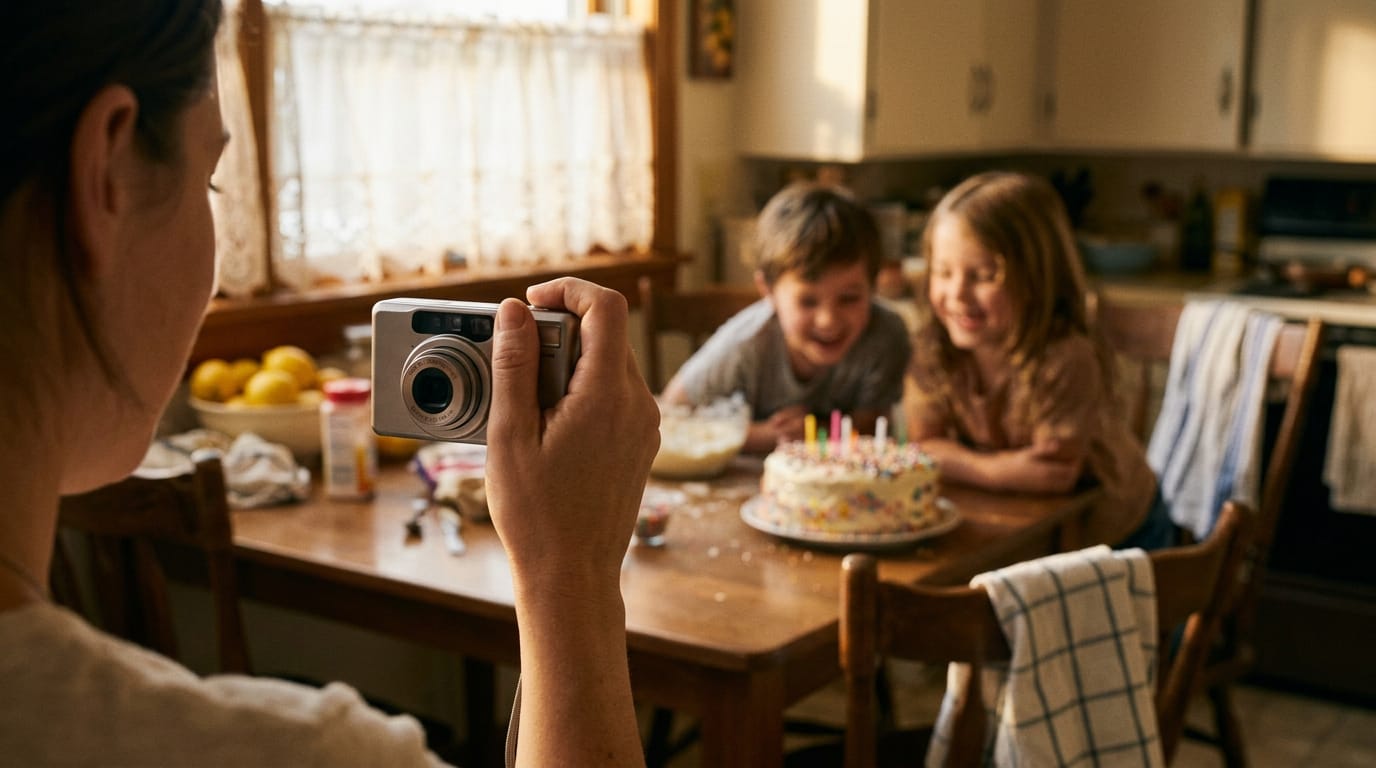
Think of the camera you toss in a bag for a weekend trip: it fits in a pocket, it has one lens built in, and you just point it and press the button.
That’s the idea behind a point-and-shoot camera, a compact camera that handles most of the settings for you. Here’s the short answer: it’s a small, all-in-one camera built for simple, reliable shooting.
In this post, we’ll cover what these cameras are, who they suit best, the features worth checking, how they compare to other options, and whether one belongs on your shelf.
We’ll also look at when a compact beats your phone or webcam for filming yourself, once your light is sorted.
What a Point and Shoot Camera Is
Ever wished you had a camera you could grab and use right away? That’s a point-and-shoot camera, and we’ll break down what that means.
What the name really means
You point the camera at your subject and shoot. These are also called compact cameras, since they’re small enough to tuck into a pocket. They handle automatic exposure (how bright the picture is) and automatic focus (what’s sharp). They also set:
- the shutter speed (how long light is let in)
- the aperture (how wide the lens opens)
- ISO (how sensitive the sensor, the chip that records the picture, is to light)
You choose what goes in the frame, and the camera handles how it’s recorded.
Traits that set them apart
Most point-and-shoot cameras share these traits:
- Small and portable. It fits in a pocket or small bag.
- Easy to use. Automatic settings mean there’s little to learn.
- Affordable. They’re usually a budget-friendly way in.
- Fixed lens. The lens is built in and can’t be swapped.
- Smaller sensor. That recording chip is smaller than in bigger cameras, so it struggles more in dim rooms.
For example, a streamer who needs a quick photo of her new desk setup for a brand deal can grab the compact, press the button, and send the shot in minutes.
Film and digital versions compared
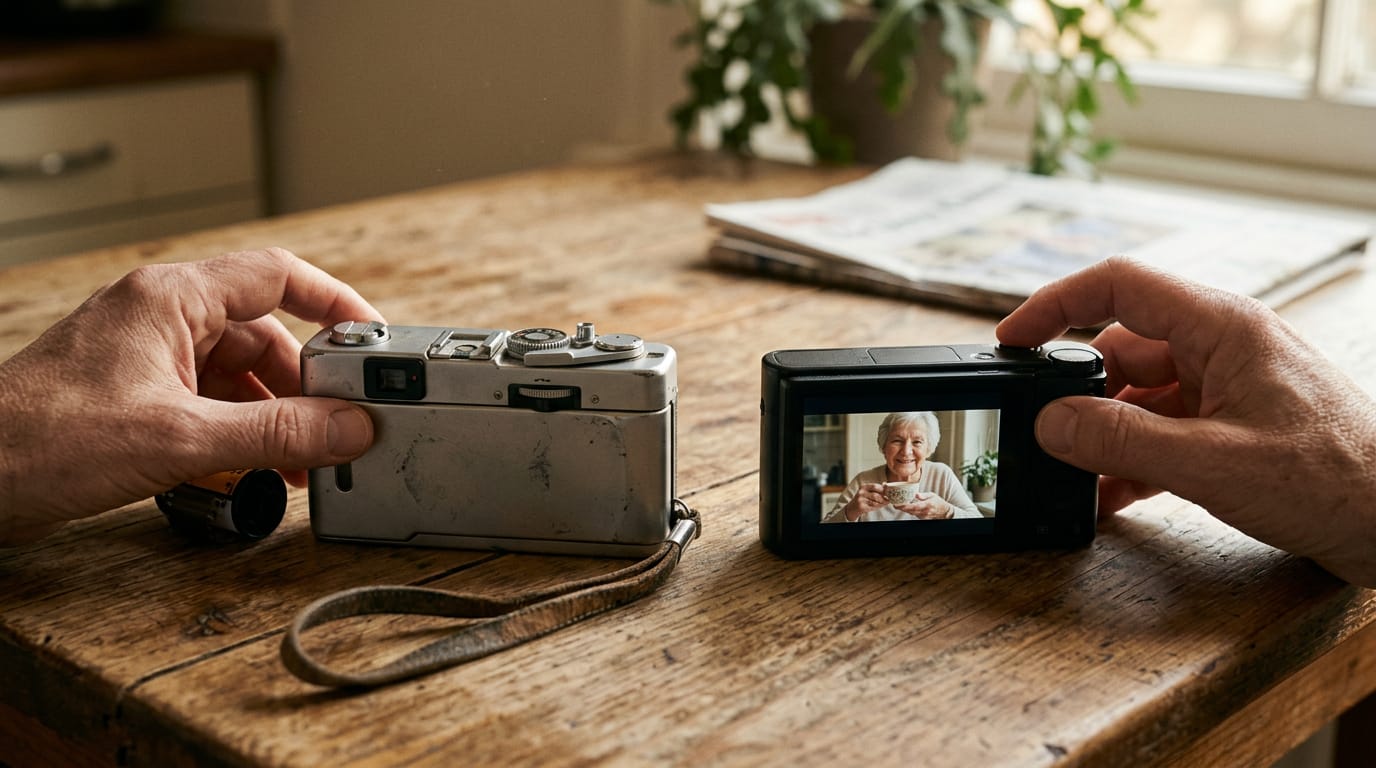
Point-and-shoot cameras came in film and digital versions.
- Film point and shoot cameras. They recorded images on a roll of film that had to be developed before you could see the results.
- Digital compact cameras. A sensor replaces the film, so each shot is a file you can check right away.
Same button, same idea. Only the recording changed.
Who These Cameras Suit Best
Are point and shoot cameras still a thing? Yes, and they suit more people than you might expect. A point and shoot is a small camera that handles most settings for you, so you just aim and press.
Who gets the most from one
- Beginners testing photography. Learn composition and light without fighting dials.
- Untrained users. Good pictures without learning any settings.
- Budget-conscious buyers. A home podcaster after a second angle gets one without paying for a full kit.
- Children handling cameras. Kids can explore framing without a costly body at risk.
- Pros as backup camera. A wedding photographer keeps one in the bag, ready if the main camera has a bad day.
Creative and practical perks
- Simplicity frees creativity. Fewer choices leave more room for spotting light and framing. Less fiddling. More looking.
- Surprise of unpredictable results. Automatic settings sometimes deliver shots you’d never plan, and that’s part of the fun.
- Relaxes subjects. A portrait photographer’s nervous client loosens up around a small, unassuming camera.
- Quick casual snapshots. Ready in seconds for everyday moments.
- Rejects gear snobbery. The camera matters less than how you use it.
- Point and shoot vs. smartphone. A phone is always handy, but a compact is built for pictures alone.
What image quality to expect
- Good for the average photographer. Everyday results hold up well.
- Pixel count sufficient. Pixel count (the tiny dots that make up an image) is plenty for social posts and video thumbnails.
- Limited manual control. You can’t fine-tune every setting, so you work within what it gives you.
- Viewfinder and focus uncertainty. Some compacts frame on the back screen instead of an eyepiece, and autofocus doesn’t always land where you expect.
What Are the Main Features?
The main features of a point-and-shoot camera are its exposure controls, zoom, sensor, and a few extras for video and sharing.
Auto modes and exposure tweaks
Full auto mode lets the camera make every decision, which is a fine starting point. Scene modes preset settings for portraits or night shots. Exposure compensation nudges brightness up or down when a bright window washes out your face.
White balance corrects color so warm bulbs don’t leave everyone looking orange. Macro mode focuses on very close subjects, like products on your desk.
Optical zoom versus digital zoom
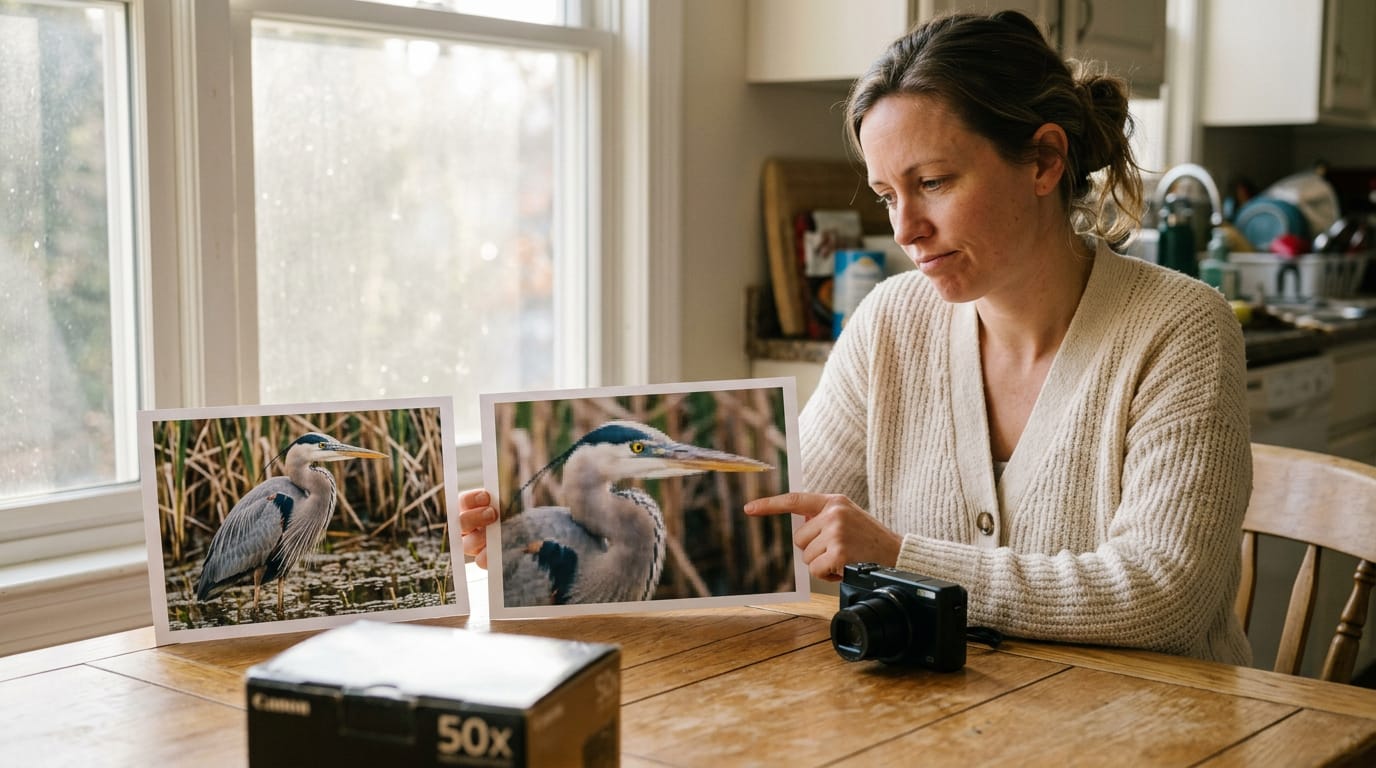
According to All Camera Guide’s buying guide, point-and-shoot cameras have a minimum of 3X zoom. Optical zoom makes the subject closer, while digital zoom only makes the image bigger and reduces quality.
A 50X super zoom sounds impressive on the box, but check how much of it is optical.
Sensors, megapixels and JPEG files
The sensor turns light into your image, and compacts use either a CCD (charge-coupled device) or CMOS (complementary metal-oxide-semiconductor) type.
Megapixels count the pixels in each file, but a bigger number doesn’t automatically mean a better picture. Small sensors gather less light, so dim rooms get grainy noise. Good light fixes that.
JPEG (short for Joint Photographic Experts Group) is a compressed format, and heavy compression trims detail.
Anti-shake, flash and extra features
Image stabilization steadies handheld shots, which matters most when you’re zoomed in. A built-in flash is convenient but harsh on faces, so your key light should lead. The self timer gives you a few seconds to get into frame.
Video mode records at 720p or 1080p, Wi-Fi sharing moves shots to your phone, and an LCD (liquid crystal display) or touchscreen makes menus quicker.
When you’re filming yourself, check three things:
- A flip screen that rotates to face you, so you can check framing without guessing.
- 1080p video, which looks sharper than 720p.
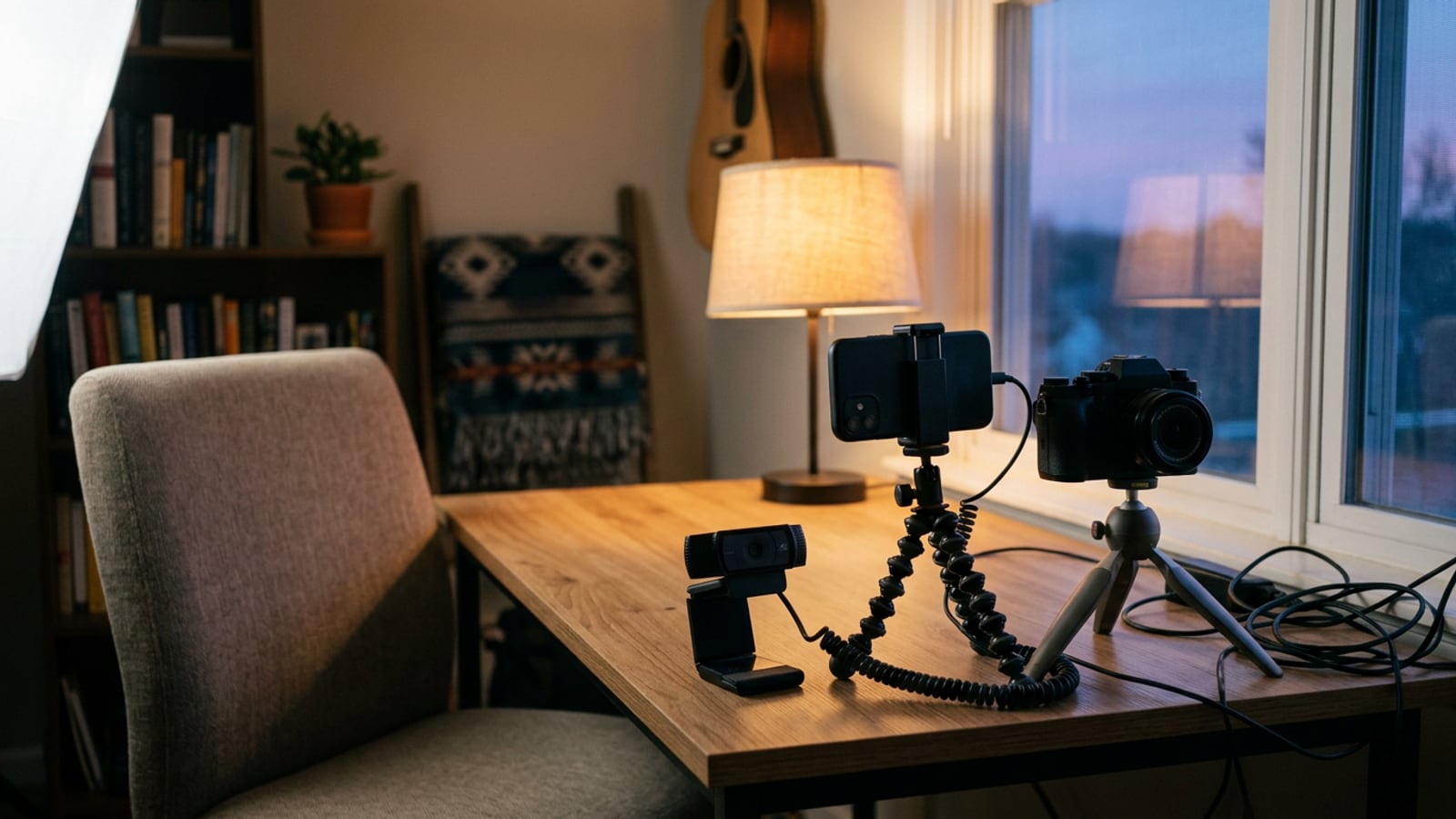
- Clean HDMI output: an HDMI (High-Definition Multimedia Interface) feed with no on-screen menus, so the camera can work as a webcam.
Think of a streamer who props a compact on a shelf, flips the screen to check her framing, and runs a clean feed into her streaming software. She skips the separate webcam. Framing a shot on that screen also gives room to test a slanted camera angle.
How They Stack up Against Other Cameras
A point-and-shoot is one branch of a bigger family, and it’s easier to judge one next to the others.
The main kinds you can buy
The four main types of camera you’ll find in this part of the market are:
- Ultra-compact pocket models: the smallest option, with the simplest controls, for grab-and-go clips.
- Bridge and super zoom cameras: bulkier bodies with a long zoom lens you can’t swap out.
- Advanced compacts: a larger sensor than pocket models and manual dials for more control over the image.
- Rugged waterproof models: built to take drops, dust, and water, though image quality usually takes a back seat.
How DSLRs and mirrorless cameras differ
A digital single-lens reflex (DSLR) camera is larger and heavier with a mirror that bounces light to an optical viewfinder and more manual controls. Its big draw is interchangeable lenses, so you can swap in a wide, portrait, or zoom lens as needed.
Mirrorless cameras drop the mirror and show the image electronically, so they can be smaller. Micro Four-Thirds is a mirrorless middle ground: a sensor bigger than a compact’s, in a body smaller than most DSLRs.
Sensor size is less about zoom and more about light. Larger sensors gather more of it, so they handle dim rooms better, which matters when a desk lamp is your only source. Size buys you light.
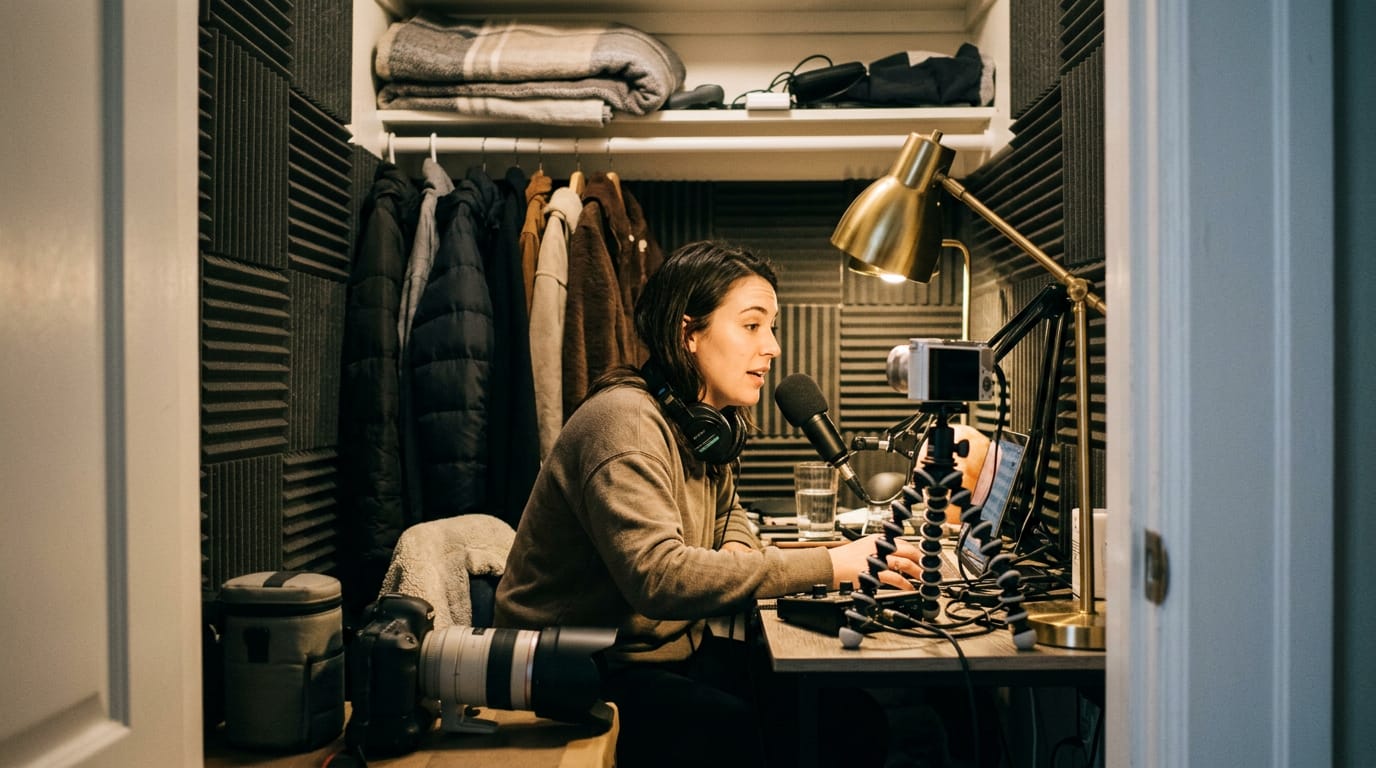
Consider a podcaster recording in a converted closet. A DSLR’s bulk and extra lenses would crowd that small room, so a mirrorless body with a Micro Four-Thirds sensor often gets her a cleaner image with one camera and one lamp.
Medium format cameras go bigger still, which puts them beyond this article.
Is a Point and Shoot Worth Buying?
Is it worth buying today? For most creators filming at home, yes, once the light is sorted. A point-and-shoot camera is a small, all-in-one camera.
Picture a podcaster with her window and lamp already set: a compact aimed at her face looks sharper than her webcam. Without good light, though, a better camera just records the problem more clearly.
How much these cameras cost
Prices run from under $100 to $500 and vary with features, as PCMag’s roundup of tested cameras shows. Light first, camera second: spend your first dollars on a lamp you can position.
Buying older film models safely
Older film models are a different buy. A Japanese photography feature on the Nikon L35AF identifies it as a film point-and-shoot, and older cameras can be faulty, so check before you pay:
- Faulty bodies. Ask whether the seller tested the camera, and you’ll want to check it yourself on arrival.
- Metering and shutter. Confirm the shutter fires and the metering, the camera’s read on the light, responds.
- Tested and restored sellers. Favor sellers who say their cameras were tested or restored.
- Warranty and condition. Get the condition in writing and find out what, if anything, the warranty covers.
Ask first. Pay second.
Models worth a closer look
Four we’d check out:
- Sony DSC-WX350. A compact to test against your phone once your light is set.
- Canon PowerShot ELPH 190. Another compact to compare. Check its current specs before you commit.
- Nikon W300 waterproof. Its rugged build suits messy or outdoor setups. As Digital Camera World’s review points out, it’s chunkier than your average compact of yore.
- Nikon L35AF film. A film option for anyone who wants film and accepts the extra steps.
A point-and-shoot camera is worth knowing about because it does one job well: it gives you a clear, easy image without a steep learning curve. It won’t suit every project, and it isn’t the only path to better video.
But for many solo creators, it’s a simple, dependable step up from a phone or webcam.
The key is matching the camera to how you actually film. If you want a no-fuss option for talking-head videos, a compact can deliver a sharper picture once your lighting is set. Sort the light first, and even a simple compact has far less work to do.
References
- 35mmカメラの名機大集合 ニコンL35AF(ピカイチ) — jglobal.jst.go.jp (2006)
- Compact Digital Camera with Optical Zoom: Complete Buying Guide — allcameraguide.com (2026)
- Nikon Coolpix W300 review — digitalcameraworld.com
- The Best Point-and-Shoot Cameras We’ve Tested for 2026 — pcmag.com
Questions
What are the main features of a camera?
A point-and-shoot camera’s main features include automatic exposure and focus, a built-in fixed lens, and a sensor that records images. Many models also offer optical zoom, scene modes, exposure compensation, image stabilization, flash, video recording, and an LCD screen. Features vary by model, so check which ones match your needs.
What are the four types of cameras?
The four main types of compact cameras are ultra-compact pocket models, bridge or superzoom cameras, advanced compacts, and rugged waterproof cameras. They differ in size, zoom range, manual controls, sensor size, and durability.
Are point and shoot cameras still a thing?
Yes. Point-and-shoot cameras are still available, including digital compacts and older film models. They remain useful for simple, portable photography and can provide a dedicated-camera alternative to a phone or webcam.
Is it worth buying a point and shoot camera?
A point-and-shoot can be worth buying if you want a simple, portable camera for everyday photos or video without learning many settings. It can also be a useful backup or a step up from a webcam, especially with good lighting. Compare its features and price with your phone before buying, since small sensors can struggle in dim light and offer limited manual control.
Sources
- Compact Digital Camera with Optical Zoom: Complete Buying Guide, allcameraguide.com,
- The Best Point-and-Shoot Cameras We've Tested for 2026 | PCMag, pcmag.com
- Nikon Coolpix W300 review | Digital Camera World, digitalcameraworld.com
- 35mmカメラの名機大集合 ニコンL35AF(ピカイチ), jglobal.jst.go.jp,